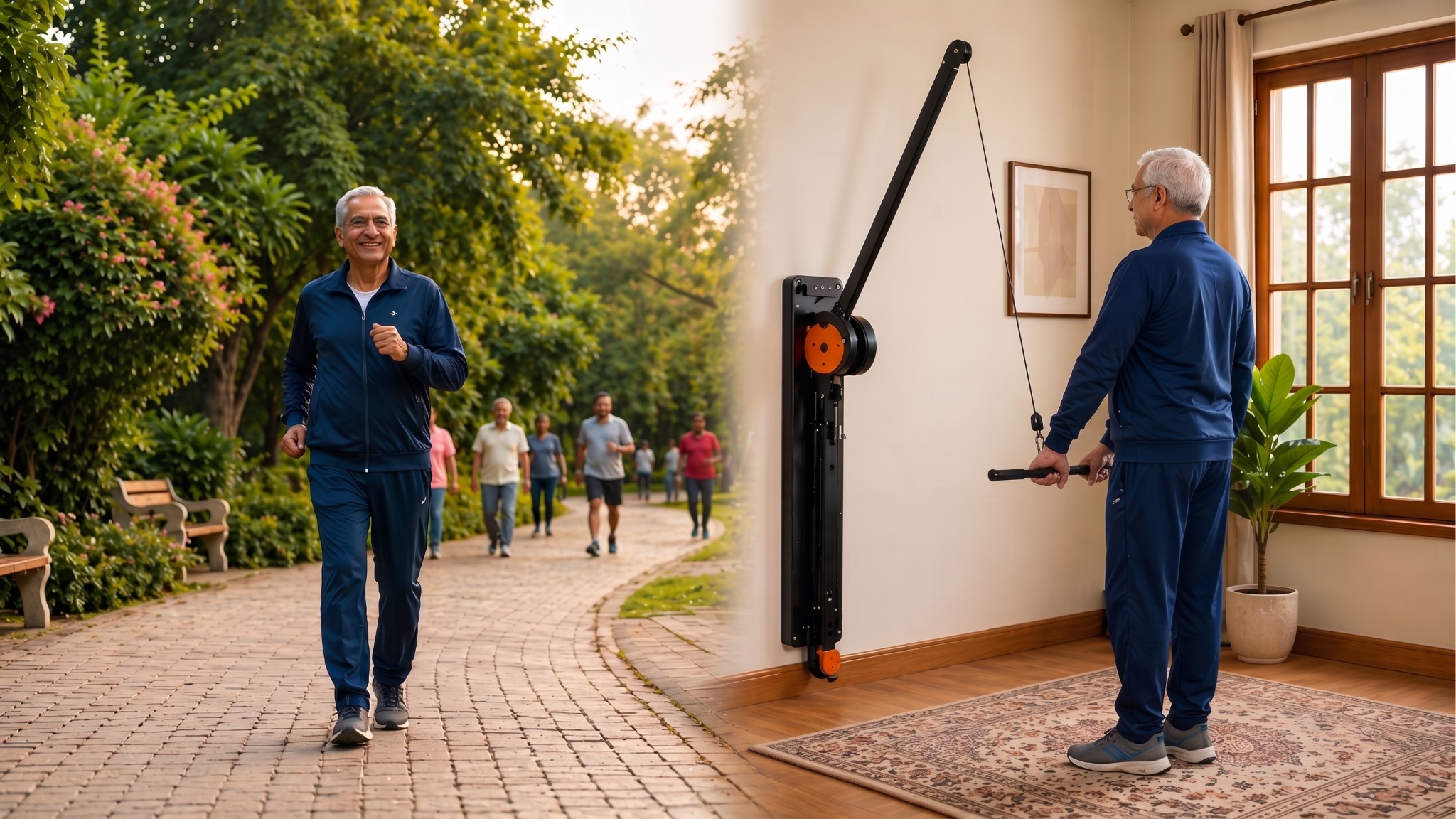
For many adults over 50, fitness means cardio.
- Walking after dinner
- Cycling in the morning
- Swimming on weekends
These are simple cardio habits that are easy to build and easy to stick to. But if you have been consistent with cardio for years and still notice your body getting weaker, cardio is probably not the solution. It was never designed to do what your body needs most at this age: preserve muscle.
Why Cardio Alone Is Not Enough After 50
Cardio is good for your heart.
It improves circulation, supports lung capacity, and helps manage blood pressure. But it does not stop muscle loss.
After 35, the body begins losing muscle gradually through a process called sarcopenia. Without resistance training, adults can lose 3 to 8% of their muscle mass per decade. After 60, that rate often accelerates.
What makes this worse is what happens when cardio is combined with dieting.
A study at Wake Forest University followed older adults over 18 months. Those who combined cardio with caloric restriction lost more lean muscle than those who only dieted, with no exercise.
The takeaway?
Cardio alone is not enough to protect your muscles as you age.
What Muscle Loss Actually Does to Your Daily Life
These are some of the most common signs of muscle loss:
- Groceries feel heavier to carry
- Getting up from a low chair becomes harder
- Climbing stairs leaves you more breathless
- Walking on uneven ground feels less steady
These changes are not inevitable signs of ageing. They are signs of muscle loss, and muscle loss is largely preventable with the right kind of training.
Why Strength Training Is the Priority for Older Adults
Strength training is the only form of exercise that directly signals your body to preserve and build muscle tissue. It is anabolic in nature and supports muscle protein synthesis, which naturally declines with age.
Here is what consistent strength training supports:
- Muscle preservation: Slows age-related muscle loss
- Bone density: Stimulates bone remodelling and reduces osteoporosis risk
- Balance and stability: Stronger legs and core reduce fall risk
- Posture: Builds upper back and shoulder strength
These are not aesthetic outcomes; they are functional ones. And they are exactly what determines how well you move through daily life as you get older.
Is Strength Training Safe for Older Adults?
This is the most common concern, and it is worth addressing directly.
The risks people associate with strength training are real, but they are specific. What makes traditional strength training risky:
- Heavy loads without supervision can cause injury
- Poor form under load puts stress on the spine and knees
- Free weights require balance and coordination
Traditional gym-based strength training carries these risks because it was not designed with older adults in mind. But strength training exercises themselves, when done with appropriate load and proper guidance, are one of the safest forms of exercise available.
The key is removing the risky elements:
- Heavy loads with no support or guidance
- Movements that put sudden pressure on joints
- The lowering phase of a lift, which causes soreness and stiffness
When those are removed, strength training for older adults becomes accessible even for people with limited mobility or no prior fitness experience.
Cardio or Strength Training? Here Is the Honest Answer
If you can only do one, choose strength training.
Cardio cannot replace the muscle-preserving signal that resistance training provides. As the body ages, that signal becomes harder to trigger and more critical to maintain.
If you can do both, the right approach is:
- Do strength training 3 to 5 times a week
- Spend the other days walking, cycling, or swimming
Even short strength training sessions of 5 to 10 minutes deliver meaningful results over time. The key is finding a format that fits your body, not one designed for someone half your age.
This is where Ferra, the strength training equipment for seniors, comes in. Built specifically for older adults, it offers guided home strength training with digitally controlled resistance, concentric-only loading, and a 5-minute daily program designed around the muscle groups ageing affects most.
Disclaimer: Always consult your doctor before starting a new exercise programme, especially if you have an existing health condition.
Cardio vs Strength Training: Frequently Asked Questions
1. Is cardio or strength training better for elderly adults?
Both have a role, but strength training should come first after 50.
Cardio supports heart health but does not preserve muscle. Strength training directly addresses the muscle loss that affects balance, mobility, and daily independence. For older adults, the best approach is to use strength training as the base and cardio as the complement.
2. Can seniors do strength training every day?
Yes, and with the right approach, daily strength training is both safe and effective for older adults. Take Ferra, for example. It is built around a 5-minute daily programme designed specifically for older adults, with digitally controlled resistance and concentric-only loading that makes training every day sustainable.
3. Is strength training safe for seniors with knee or joint pain?
Yes, when done correctly. The key is avoiding the eccentric phase, the lowering portion of movements, which causes most joint strain and soreness. Controlled, low-impact resistance movements are generally well-tolerated by older joints.
4. How long before seniors see results from strength training?
Most older adults notice improved stability and ease of movement within 4 to 6 weeks of consistent training. Muscle strength builds gradually, but the functional benefits like climbing stairs, carrying bags, and getting up from chairs often show up sooner.