Blogs
Exercises for Seniors: How to Help Your Parents Stay Strong After 50

After 50, the human body can lose up to 8 percent of its muscle mass every decade. After 60, that rate often increases.
Most Indian families do not know this. And many parents will not openly admit when daily tasks begin to feel harder. They quietly adjust. They avoid the stairs. They stop lifting heavier items. They sit down more often.
The problem is that muscle loss stays invisible until it becomes serious. A fall, a fracture, or a sudden hospital visit often becomes the moment when families realize something has been declining for years. Most families only start looking for ways on how to prevent muscle loss after 45 after these warning signs appear.
If your parents are over 50, the window to act is right now. The right exercises for seniors can slow down this decline and help them stay independent much longer.
What Is Actually Happening to Their Body After 50?
After midlife, the body begins a gradual decline in muscle mass known as sarcopenia. The loss is slow and subtle at first. Strength drops long before it becomes visibly noticeable.
Muscle loss goes beyond just losing strength. It can influence:
- Energy levels throughout the day.
- Balance and coordination.
- Blood sugar control.
- Risk of falls and fractures.
For Indian families, diet often plays a role as well. Many traditional meals are high in carbohydrates but relatively low in protein. When a muscle does not receive enough protein and resistance stimulus, it becomes easier for the body to let it decline.
Research published in the Journal of Aging and Physical Activity has shown that sarcopenia (age-related progressive loss of skeletal muscle mass, strength, and function) significantly increases fall risk and mobility limitations in older adults. Yet culturally, many families accept weakness with a simple explanation: “Umar ho gayi hai.” That quiet acceptance often delays action.
Introducing simple exercises for seniors early can slow down this process before it becomes severe.
What Do Most Families Try And Why Does It Fall Short?
Evening walks
Evening walks are a healthy habit and good for cardiovascular health. But walking alone does not provide enough resistance to maintain muscle mass or engage the upper body.
Cutting carbs or adding protein powder
Improving diet can help overall health. But without resistance stimulus, the body has no reason to hold onto muscle tissue. Protein alone cannot reverse muscle decline.
Yoga and stretching
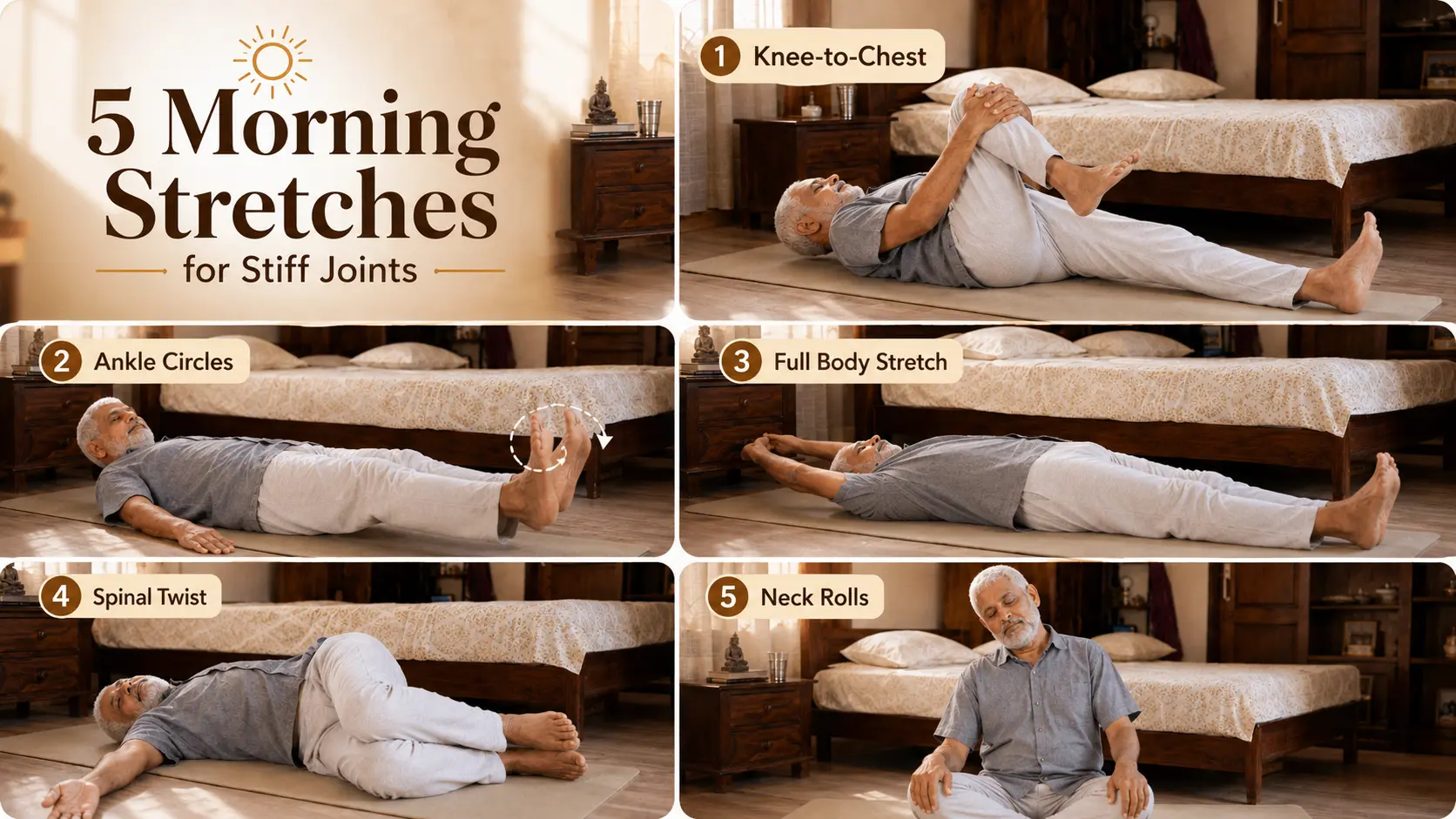
Yoga improves flexibility, breathing, and joint mobility. But it does not provide progressive resistance, which is the key stimulus needed to counter muscle loss.
Because of this, many families try several approaches but never see meaningful strength improvement.
What Actually Works to Slow Muscle Loss?
Research consistently shows that resistance training is the most effective intervention for sarcopenia.
Adults in their 60s and even 70s can gain measurable muscle strength within weeks of beginning structured training. Age reduces the speed of recovery but does not remove the body’s ability to adapt.
The key concept is the minimum effective dose. Short sessions done consistently work better than occasional long workouts.
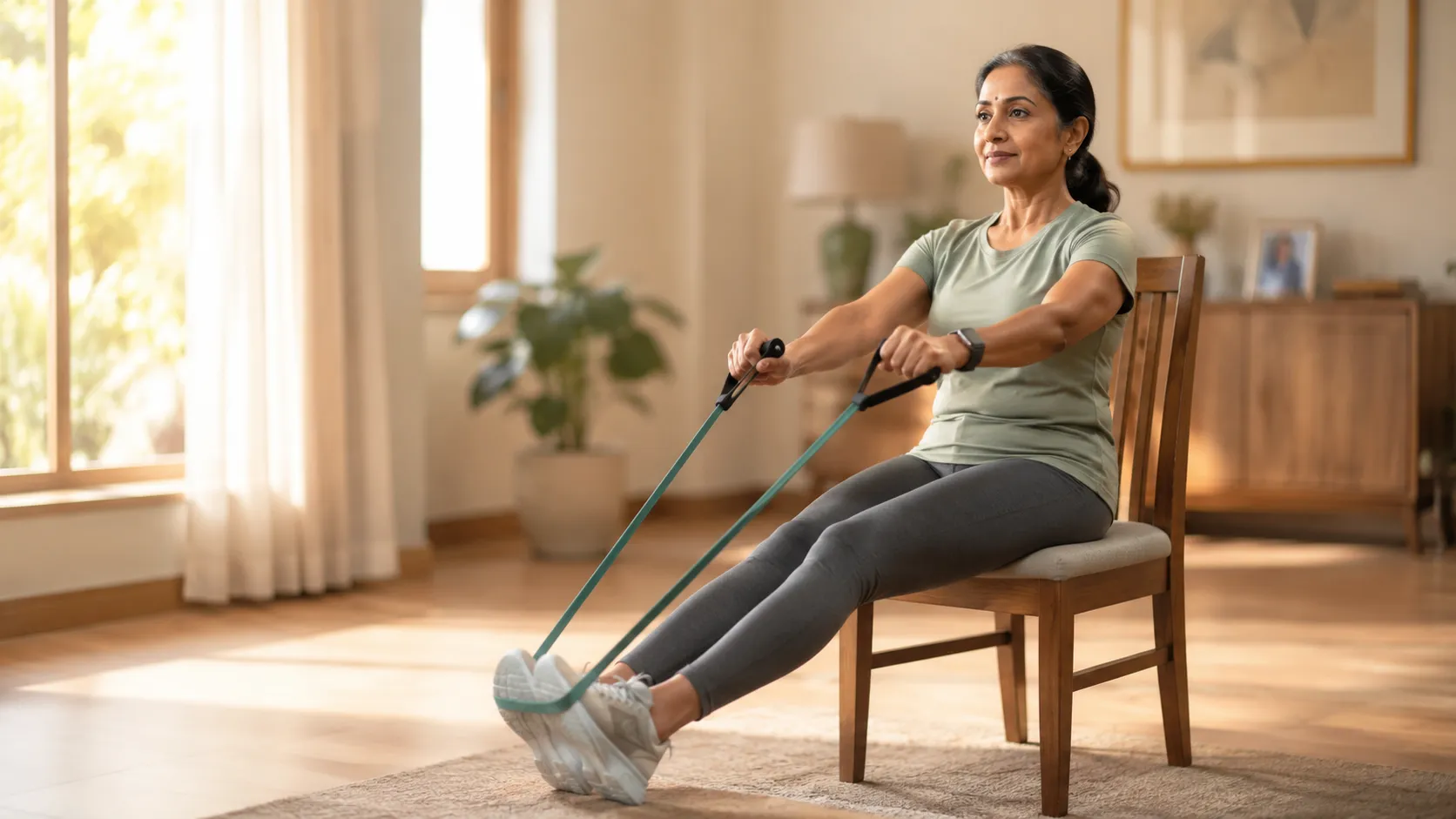
A practical routine might include:
- Simple lower-body movements that improve standing strength.
- Light pulling or pushing movements for arm strength.
- Short sessions repeated daily rather than long weekly workouts.
Strength sessions also raise metabolic activity for several hours after exercise, a phenomenon known as excess post-exercise oxygen consumption. This helps regulate weight and blood sugar as people age.
Because of this, many physiologists consider strength training equipment for seniors as one of the most important health interventions after 50.
How Do You Talk to Your Parents About Exercise Without It Feeling Awkward?
This is where many families struggle. The science is clear, but conversations about health can feel uncomfortable.
A few simple strategies make the discussion easier.
- Focus on function, not fitness.
Instead of saying “You should exercise more,” say “This will make climbing stairs easier.”
- Connect it to what matters to them.
Many parents care deeply about independence and staying active with grandchildren. Frame the conversation around those goals.
- Present it as a shared activity.
When the whole family participates, it feels supportive rather than corrective.
- Remove logistical barriers.
Older adults often resist exercise because gyms feel intimidating or inconvenient. A routine that can be done at home removes that friction.
In many cases, starting with simple frozen shoulder exercises at home can also help improve mobility before moving to full-body strength routines.
Home-based exercises for seniors can make this transition far easier. Simple routines done daily can feel approachable rather than overwhelming.
What Is a Safe Starting Point for Exercises for Seniors?
A safe starting point focuses on simple movements that mirror daily activities.
Examples include:
- Sit-to-stand movements make getting up from a chair easier.
- Light lifting patterns that help carry groceries.
- Step movements that support stair climbing.
These movements form the foundation of many effective exercises for seniors.
Ferra introduces a short daily routine using adaptive resistance. The resistance adjusts to the person’s strength level, removing guesswork. Its concentric-only resistance means the effort happens while lifting, while reducing joint strain during the lowering phase.
This makes it safer for the knees and lower back while still helping build strength. Even a few minutes of structured work can make a difference when done consistently.
Some people prefer simple home elderly fitness equipment rather than complex systems, especially when the goal is a routine that feels manageable.
How Can You Help Your Parents Start Today?
Helping parents stay strong after 50 does not require dramatic changes.
It starts with:
- Introducing simple exercises for seniors.
- Making routines short and consistent.
- Keeping the focus on independence and daily function.
If you want guidance on where to begin, you can book a free 15-minute consultation with a Ferra expert. They can help assess your parents’ current strength and suggest a safe starting routine.
You cannot stop your parents from aging. But you can influence what that aging looks like.
The best time to act is before they need help, not after.
Disclaimer: Consult a healthcare provider before beginning any exercise programme.
FAQs on Strength Training Frequency and Safety for Seniors
1. What are the best exercises for seniors to stay strong after 50?
The best exercises for seniors focus on resistance movements that strengthen major muscle groups. Examples include sit-to-stand movements, light squats, step-ups, and gentle lifting patterns that improve daily strength and balance.
2. How often should seniors do strength exercises?
Most experts recommend exercises for seniors that include resistance training at least 3–5 times per week. Even short daily sessions of 5–10 minutes can help maintain muscle strength and mobility when done consistently.
3. Can people over 60 still build muscle?
Yes. Research shows adults in their 60s and 70s can still gain muscle through resistance training. The body remains adaptable at any age, which is why regular exercise for seniors is important for maintaining strength and independence.
4. Why is muscle loss common after 50?
Muscle loss after 50 is mainly caused by sarcopenia, the natural decline of muscle mass with age. Lower activity levels, reduced protein intake, and lack of resistance training accelerate the process.
5. Are home-based exercises safe for older adults?
Yes. Many exercises for seniors can be done safely at home when they focus on controlled movements and joint-friendly resistance. Starting with short sessions and proper guidance helps reduce injury risk.