Your hip pain is probably not coming from your hip.
In many adults over 45, hip stiffness and discomfort are caused by weak glutes, tight hip flexors, and an underworked core rather than damage to the hip joint itself. The joint ends up carrying a load that the surrounding muscles were meant to absorb.
That is why stretching alone rarely solves the problem. And complete rest usually makes it worse. The hips respond best to gradual strengthening. The right hip pain exercises for seniors can rebuild support around the joint and reduce daily discomfort.
What Is Actually Causing Your Hip Pain?
Hip pain in older adults is often a muscle imbalance problem rather than a joint injury.
Several factors contribute to this:
- Prolonged sitting tightens the hip flexors, pulling the pelvis forward and straining the joint, which is why exercises for people who sit all day are highly relevant for adults dealing with hip stiffness.
- Weak glutes force the hip to absorb load during walking and climbing stairs.
- Muscle loss accelerates after 45, reducing the muscles that protect the hip.
Daily habits in India can increase the strain further. Sitting cross-legged, squatting for household tasks, and climbing stairs frequently load the hips. When the surrounding muscles are weak, the joint begins to compensate.
Hip-related complaints are among the top three musculoskeletal issues reported by Indians over 50. This is why consistent hip pain exercises for seniors are often recommended to restore balance around the joint.
What Are the Best Hip Pain Exercises at Home?
The following hip pain exercises for seniors help strengthen the muscles that stabilize the hip while keeping the movements safe and controlled, much like other exercises for seniors at home designed to build strength without overloading the joints.
1. Clamshell

How to do it
- Lie on your side with knees bent and feet together.
- Lift the top knee upward like a clamshell opening.
- Lower slowly.
Targets
- The gluteus medius is one of the most important hip stabilisers.
Tip
Keep your pelvis still. If your hips rock backwards, the exercise loses its effectiveness.
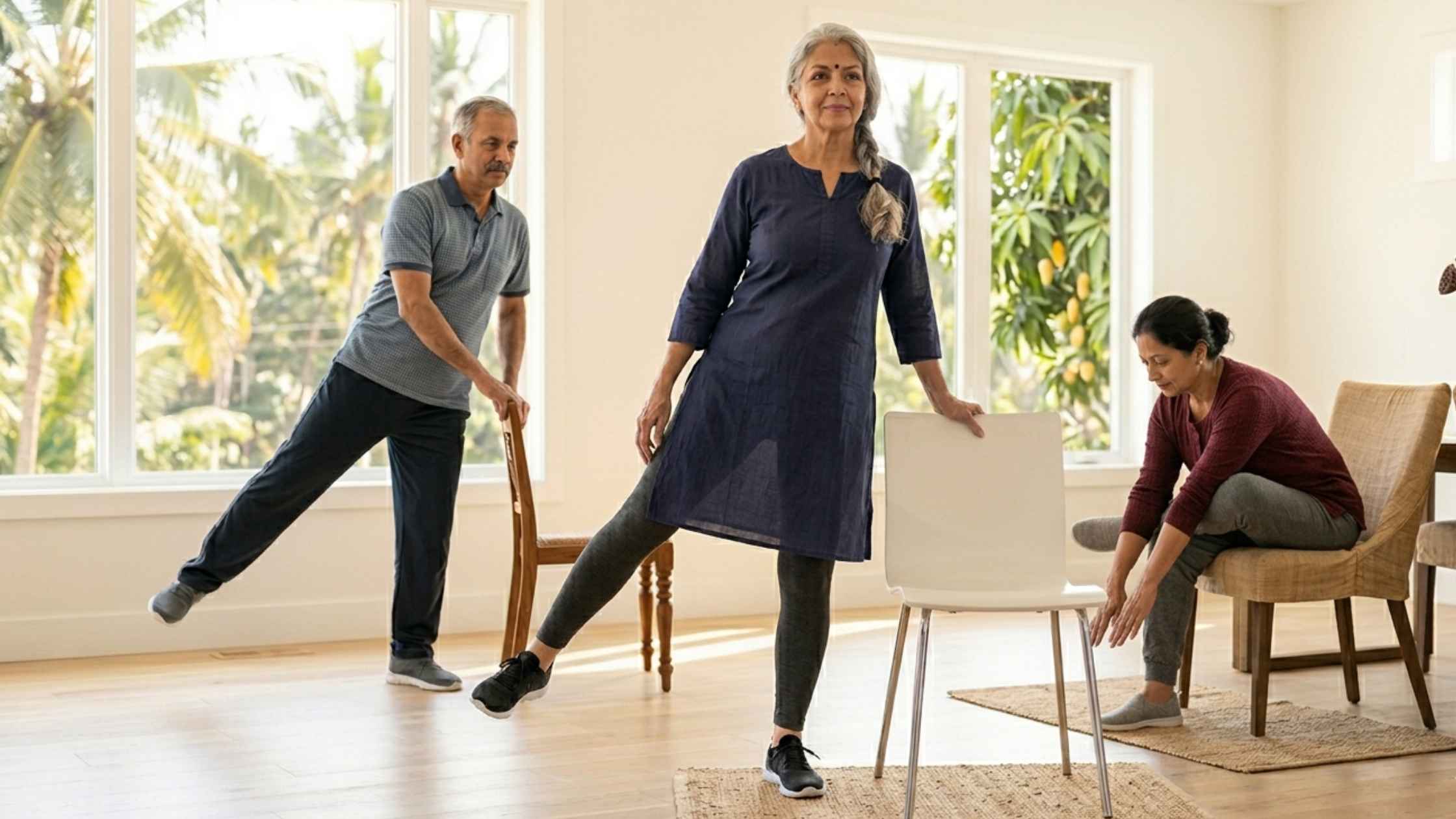
2. Standing Hip Abduction

How to do it
- Stand upright and hold a wall or chair for balance.
- Lift one leg slowly to the side.
- Lower it with control.
Targets
- The outer hip muscles stabilise the joint during walking.
Tip
Slow the lowering phase. Controlled motion builds more strength.
3. Goblet Squat (Shallow)

How to do it
- Hold light resistance at chest level.
- Bend your knees and hips slightly into a shallow squat.
- Return slowly to standing.
Targets
- Glutes, quadriceps, and hip stabilisers.
Tip
Only squat to a pain-free depth. Even shallow squats effectively strengthen the hip muscles.
Ferra’s goblet squat uses concentric-only adaptive resistance, which reduces strain on the hip joint while strengthening surrounding muscles.
4. Hip Flexor Lunge Stretch

How to do it
- Kneel on one knee with the other foot in front.
- Gently shift your body forward.
- Hold the stretch for about 30 seconds.
Targets
- Tight hip flexors that pull the pelvis forward.
Tip
Repeat on both sides twice daily for best results.
5. Glute Bridge with Hold

How to do it
- Lie on your back with your feet flat on the floor
- Lift your hips upward
- Hold for 5 seconds before lowering slowly
Targets
- Glutes and posterior chain muscles
Tip
The hold at the top activates the glutes fully. Do not rush this phase.
These hip pain exercises for seniors gradually restore strength and reduce load on the hip joint during everyday activities.
Before You Start: Safety Checks for Seniors Above 55
Hip exercises work well when the starting point is right. For seniors, a few simple checks before each session make the difference between steady progress and a setback.
What to avoid:
- Deep squats or lunges past a pain-free range. Shallow is effective enough.
- Fast, jerky movements. Every rep should be slow and controlled in both directions.
- Exercising through sharp or shooting pain. Mild muscle fatigue is normal. Sharp joint pain is not.
- Holding your breath during effort. Exhale on the exertion phase of every movement.
When to stop and rest:
- Pain that worsens during the movement or lingers for more than an hour after.
- Any new swelling around the hip or groin area.
- Dizziness or loss of balance mid-exercise.
- A sudden change in how the hip feels compared to the previous session.
Modification tips if mobility is limited:
- Do clamshells and glute bridges on a firm mattress if getting to the floor is difficult.
- Use a sturdy chair back for balance during all standing exercises, not just when you feel unsteady.
- Reduce the range of motion on the goblet squat until the hips feel comfortable. A 20-degree bend still activates the glutes.
- If a 30-second stretch hold feels too long, start at 15 seconds and build from there.
None of these modifications reduce the effectiveness of the exercises. They make consistent practice possible, which matters more than doing any single rep perfectly.
How Can You Build a Consistent Hip Strengthening Routine?
Hip strength improves gradually, so consistency matters more than intensity.
Follow these simple guidelines:
- Expect 3–4 weeks before noticeable improvement in daily movement.
- Combine stretching with strengthening exercises in each session.
- Attach your routine to an existing habit, such as after evening tea or before bedtime.
- Track a functional improvement, like whether climbing stairs feels easier each week.
Short daily sessions are more effective than occasional long workouts. Practicing hip pain exercises for seniors regularly helps rebuild the muscles that protect the hip.
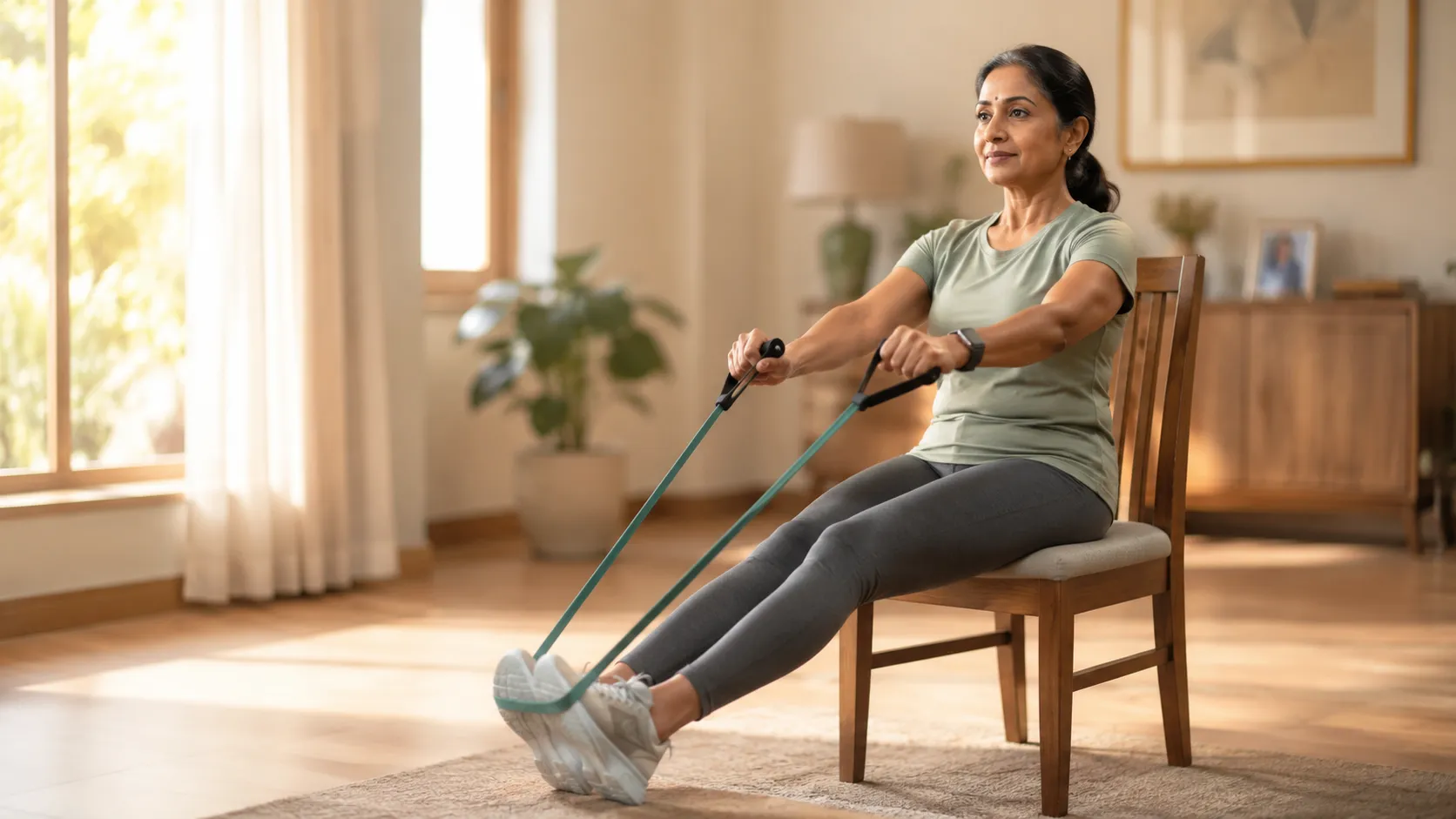
As pain decreases, structured strength training equipment for seniors becomes important for long-term joint health, especially for adults exploring strength training over 40 to rebuild support around the hips safely.
Many older adults prefer simple home elderly fitness equipment, especially when starting a strengthening program.
Can Hip Pain After 45 Actually Improve?
Yes. In many cases, hip discomfort improves when the surrounding muscles become stronger.
The body can rebuild muscle at any age. The key is performing the right hip pain exercises for seniors consistently and progressing gradually.
Hip pain after 45 is common, but permanent hip pain does not have to be.
Learn how Ferra’s adaptive resistance programme helps adults safely rebuild hip and lower-body strength from home in just a few minutes a day.
Disclaimer: If hip pain is severe, accompanied by swelling, or follows an injury, consult a doctor before exercising.
FAQs on How Seniors Can Improve Hip Mobility Through Exercise
1. What are the best hip pain exercises for seniors?
The best hip pain exercises for seniors include clamshells, standing hip abduction, shallow squats, hip flexor stretches, and glute bridges. These movements strengthen the muscles that support the hip joint and improve mobility.
2. How often should seniors do hip pain exercises?
Most physiotherapists recommend doing hip pain exercises for seniors at least 4–5 times per week. Short sessions of 5–10 minutes daily can gradually improve strength and reduce stiffness.
3. Can hip pain improve with exercise in older adults?
Yes. In many cases, consistent hip pain exercises for seniors strengthen the glutes and stabilising muscles, which reduces pressure on the hip joint and improves daily movement.
4. What causes hip pain after age 45?
Hip pain after 45 is often caused by muscle weakness, tight hip flexors, reduced mobility, or prolonged sitting. Weak glutes and core muscles place additional stress on the hip joint.
5. When should seniors see a doctor for hip pain?
Seniors should seek medical advice if hip pain is severe, accompanied by swelling, follows an injury, or does not improve after several weeks of consistent hip pain exercises for seniors.