Most people assume staying fit after 50 requires going to the gym.
If you ask older adults why they avoid gyms, the answers are usually the same. The machines feel complicated. The environment feels intimidating. And traveling somewhere just to exercise can feel unnecessary.
What many people do not realize is that strength can be rebuilt at home. In fact, the most effective routines often start with simple exercises for seniors at home performed consistently for a few minutes each day.
Why Do Many Seniors Avoid the Gym?
For many older adults, gyms create more barriers than motivation.
Common concerns include:
- Complex machines that feel unfamiliar.
- Fear of injury when lifting weights.
- Travel and time constraints.
- Lack of guidance on safe strength exercises.
At the same time, muscle loss quietly accelerates with age. Adults can lose 3–8% of muscle mass per decade after age 30, and the rate increases after 50, which is why learning how to prevent muscle loss after 45 becomes an important part of staying strong later in life.
This loss affects balance, mobility, and joint support.
Many seniors, therefore, benefit from structured home exercises that build strength safely, without the pressure of a gym environment.
Ferra was designed around this idea: a simple 5-minute daily strength system that helps older adults build muscle at home using adaptive resistance.
Why Is Strength Training More Important Than General Exercise?
Walking and stretching are valuable, but they do not provide the resistance needed to maintain muscle.
Research published in the Journal of Aging and Physical Activity shows that resistance exercise significantly improves muscle strength and functional mobility in adults over 50.
Strength training helps:
- Maintain muscle mass that naturally declines with age.
- Improve balance and reduce fall risk.
- Protect joints such as knees and hips.
- Support everyday movements, such as standing and climbing stairs.
Most experts recommend that seniors perform strength training equipment for seniors routines 2–3 times per week to maintain muscle and joint stability.
That training does not need to happen in a gym. Simple exercises for seniors at home can activate the same muscles when performed consistently.
What Are the Best Exercises for Seniors at Home?
These movements help strengthen the muscles that support daily activities and independence.
1. Sit-to-Stand

How to do it
- Sit on a sturdy chair.
- Stand up slowly without using your hands.
- Sit down again with control.
Targets
Quadriceps and glutes.
Tip
This movement directly improves the ability to stand from chairs and low surfaces.
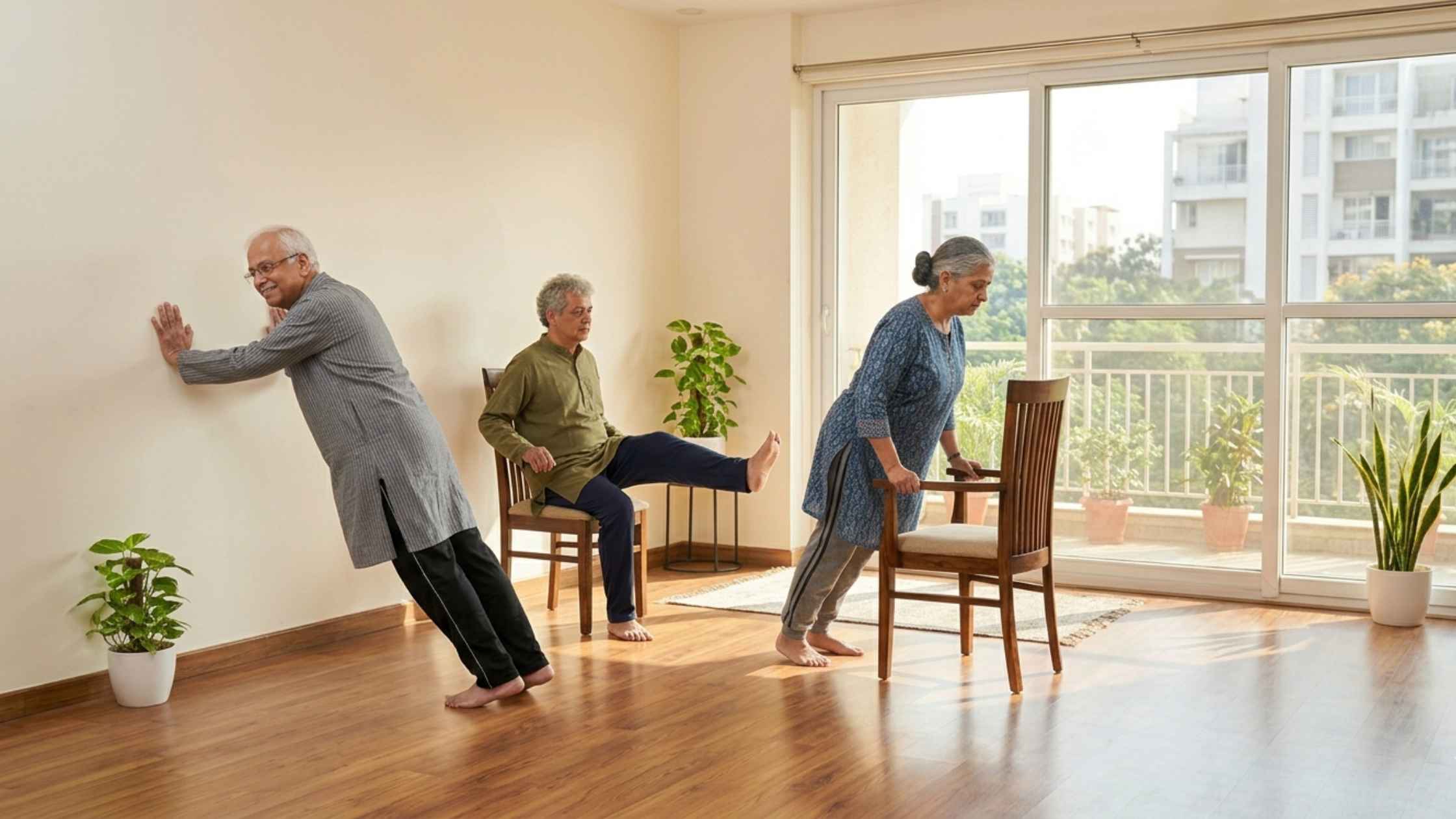
2. Wall Push-Ups

How to do it
- Stand facing a wall.
- Place your hands on the wall at shoulder height.
- Bend elbows and push back.
Targets
Chest, shoulders, and arms.
Tip
Keep your body straight rather than bending at the hips.
3. Standing Leg Raises

How to do it
- Hold a chair for balance.
- Lift one leg slowly to the side.
- Lower with control.
Targets
Hip stabilizing muscles.
Tip
Small controlled movements are more effective than large swings. For older adults who already feel stiffness in this area, pairing these with hip pain exercises for seniors can help improve hip support and mobility.
4. Heel Raises

How to do it
- Stand holding a chair or wall.
- Lift heels off the floor.
- Lower slowly.
Targets
Calf muscles and balance.
Tip
Perform this near a wall for safety.
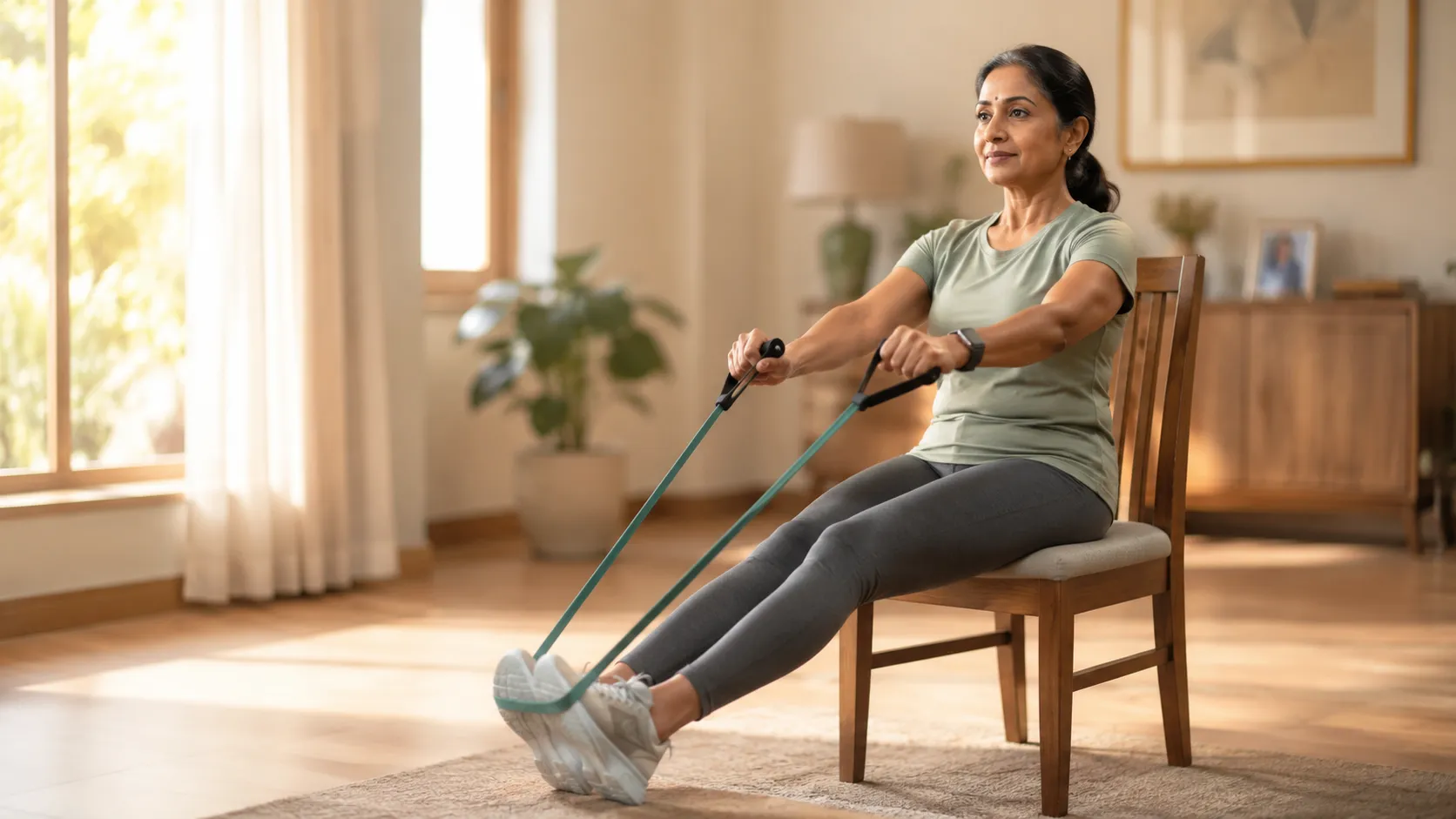
5. Seated Row (Resistance-Based)

How to do it
- Sit upright and pull resistance handles toward your torso.
- Release slowly.
Targets
Upper back and posture muscles.
Tip
Focus on squeezing the shoulder blades together.
Ferra performs this movement using concentric-only adaptive resistance, which reduces joint strain while activating the muscles responsible for posture and spinal support.
These types of exercises for seniors at home strengthen the muscles that help with everyday tasks such as walking, standing, and lifting objects.
How Can Seniors Stay Consistent With Home Exercise?
The biggest challenge for most people is not effort. It is consistency.
A few simple habits make routines easier to maintain:
- Start with 5 minutes per session rather than long workouts.
- Attach exercise to a daily routine, such as after morning tea.
- Perform exercises for seniors at home 2–3 times per week for strength gains.
Ferra simplifies this process with a structured 7-exercise elderly fitness equipment system that adjusts resistance automatically. Unlike traditional exercise equipment, it adapts to the user’s strength level, making training safer for joints.
When routines are short and structured, they become easier to repeat daily. Many people begin with basic exercises for seniors before progressing to a more structured strength routine at home.
Can Seniors Build Strength Without Going to the Gym?
Yes. Strength training after 50 depends more on consistency than location.
Simple exercises for seniors at home can maintain muscle strength, improve balance, and support long-term independence.
The key is activating the muscles that protect joints and support movement.
Want to experience how simple strength training can be? Book a Ferra demo and try a 5-minute session designed specifically for adults over 50.
Disclaimer: Consult a doctor or physiotherapist before beginning new exercises if you have a medical condition or injury.
FAQs on Exercises Seniors Can Do at Home Without a Gym
1. What are the best exercises for seniors at home?
Some of the best exercises for seniors at home include sit-to-stand movements, wall push-ups, heel raises, standing leg lifts, and seated rows. These exercises strengthen major muscle groups while remaining safe and low-impact.
2. How often should seniors exercise at home?
Most experts recommend performing strength exercises 2–3 times per week. Short daily routines of exercises for seniors at home can also help improve mobility, balance, and muscle strength over time.
3. Can seniors build muscle without going to the gym?
Yes. Seniors can build muscle with home-based strength training routines. Consistent resistance exercises performed at home can improve strength, balance, and independence without requiring gym equipment.
4. Are exercises at home safe for seniors with joint pain?
Yes, when performed correctly. Many exercises for seniors at home are designed to be low-impact and joint-friendly. Movements such as chair squats, wall push-ups, and resistance rows help strengthen muscles that support the joints.
5. What type of exercise is most important after age 50?
Strength training becomes increasingly important after age 50 because muscle mass naturally declines with age. Regular resistance-based exercises for seniors at home help maintain muscle, improve stability, and support daily activities.