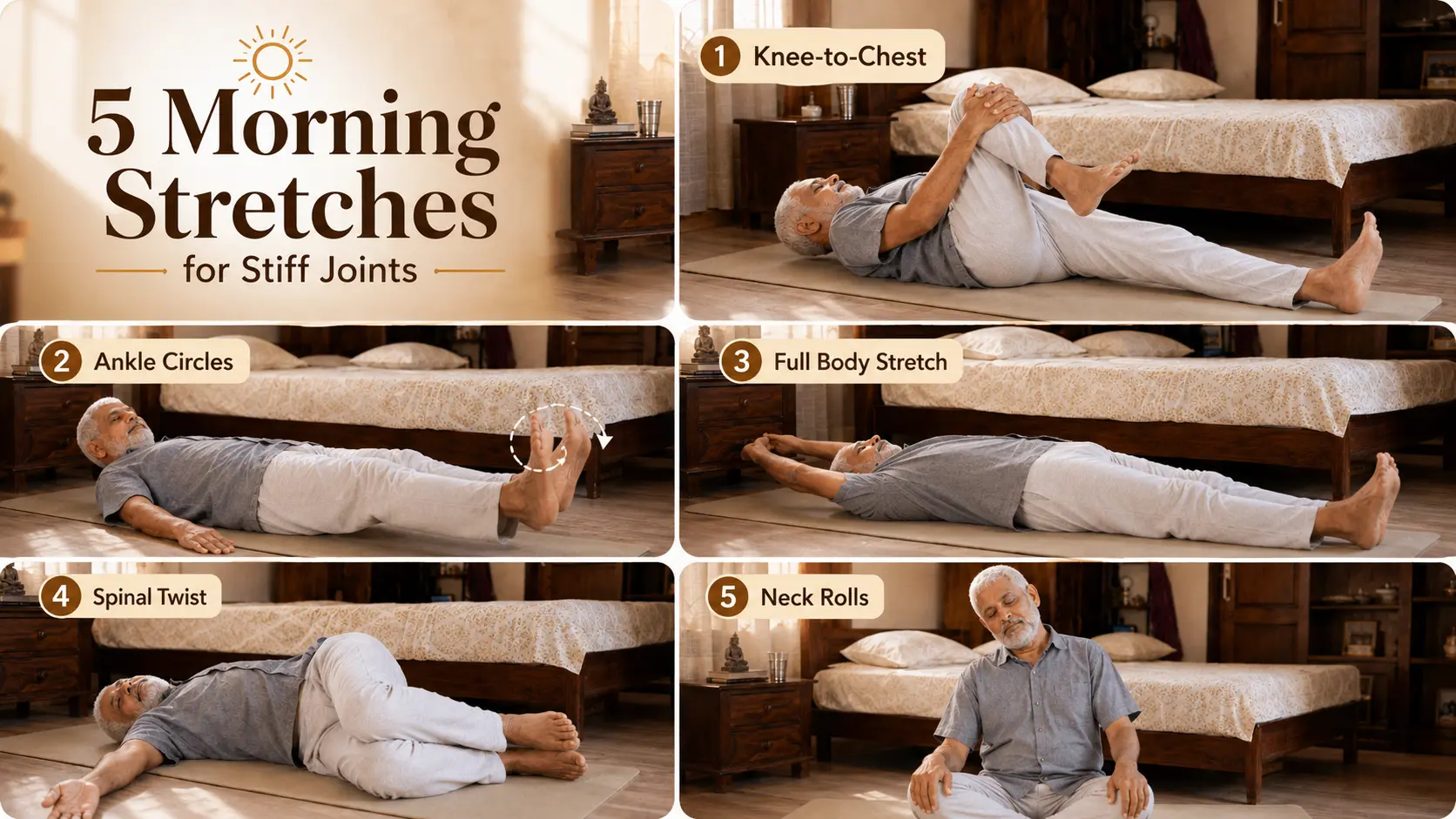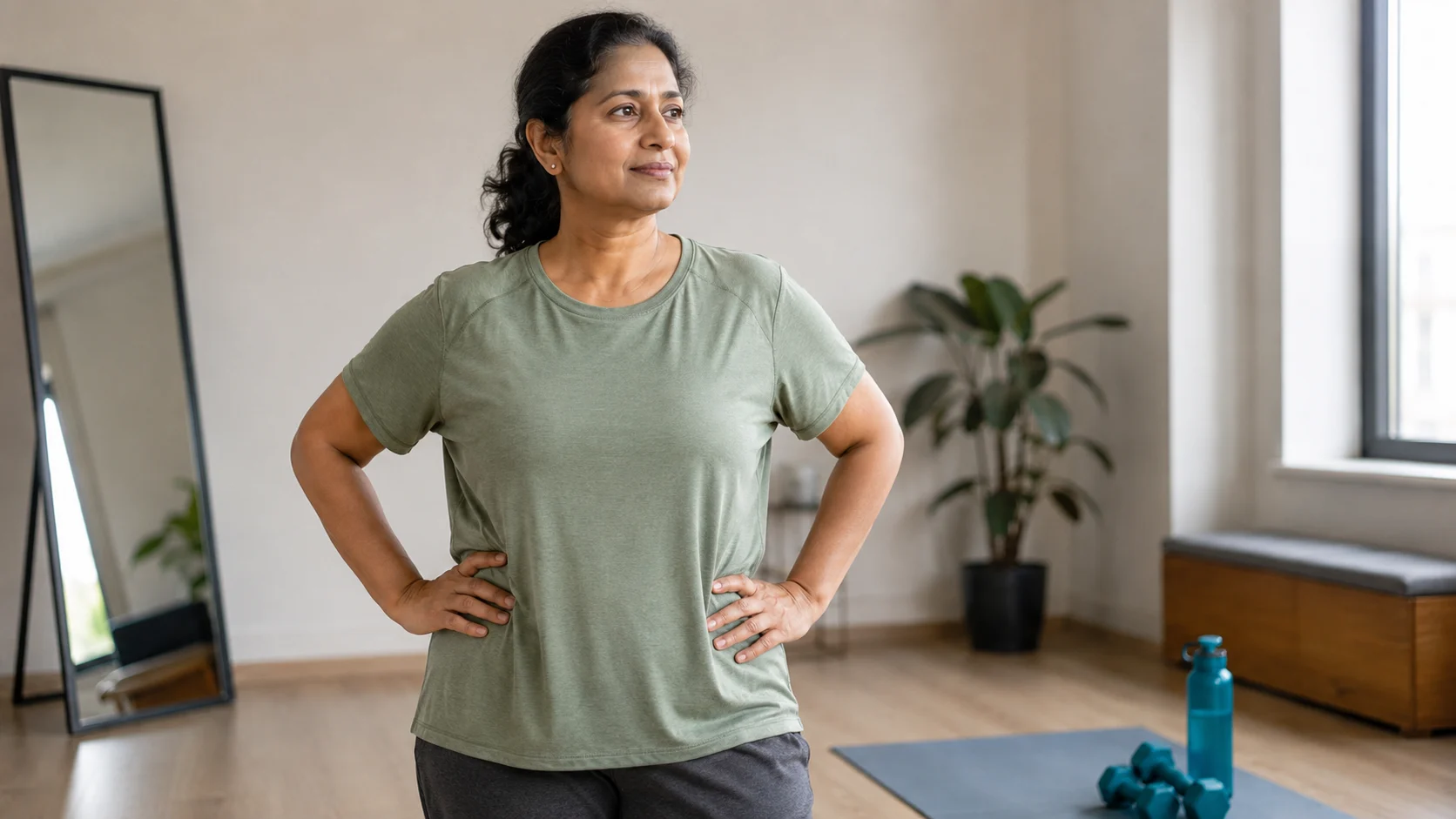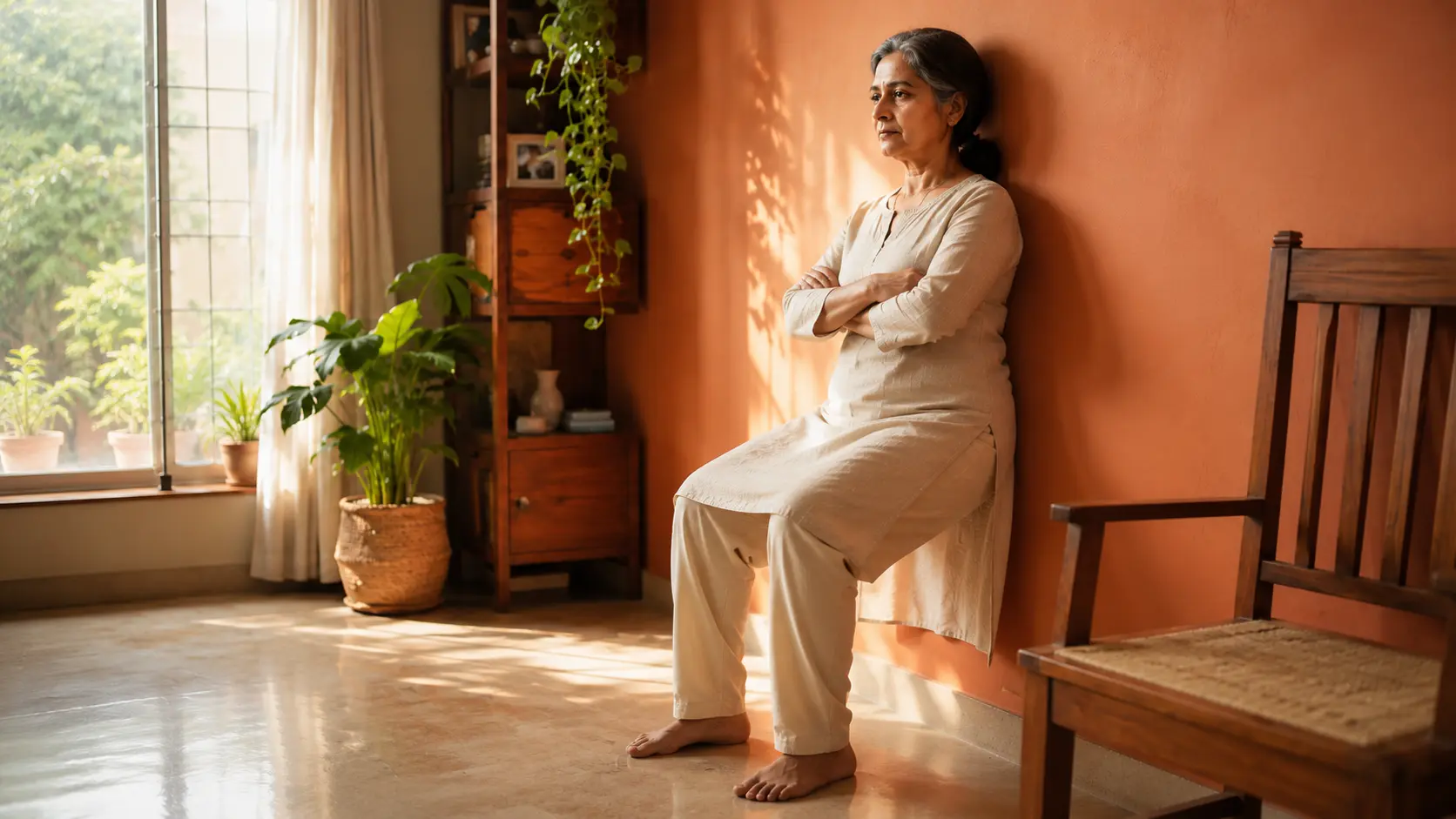
Do you need to get on the floor to strengthen your core? Not at all. Floor-based exercises can be difficult for older adults with stiff knees, hip discomfort, or limited mobility.
Common challenges include:
- Getting up and down from the floor
• Knee or hip discomfort during exercise
• Limited mobility and balance concerns
The good news is that a chair is enough. The easy core exercises for seniors in this article work the same muscle groups as traditional ab exercises, without asking you to get on the floor once.
Why the Core Gets Harder to Ignore With Age
The core is more than the stomach muscles. It includes the muscles across the front, sides, and lower back of the torso, and it is involved in almost every movement you make.
As these muscles weaken with age, everyday tasks become harder:
- Standing up from a chair
• Walking steadily on uneven ground
• Reaching for something on a high shelf
• Maintaining good posture
The signs often show up gradually. Posture starts to round forward. The lower back aches after sitting or standing for too long. Movements that once felt automatic begin to need more effort and attention.
Research published in Sports Medicine found that core strength training can improve balance and functional performance significantly in older adults. A strong core also helps the body recover faster when balance is disrupted, which is why it plays an important role in fall prevention. For anyone looking to prevent muscle loss as they get older, the core is one of the best places to start because its strength underpins every other movement in daily life.
Easy Core Exercises for Seniors: 5 Simple Chair Exercises
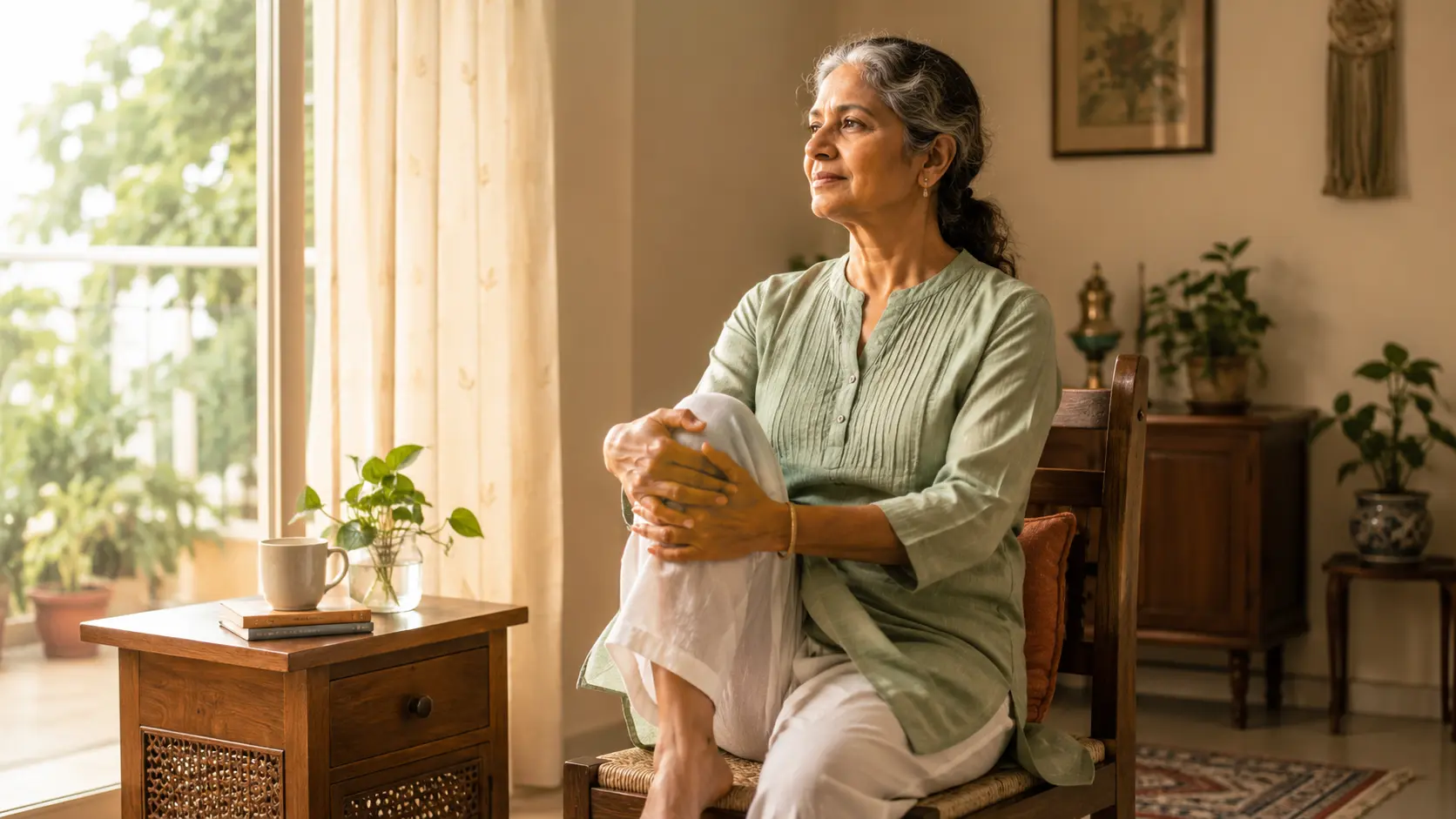
1. Seated Knee Lifts

Sit tall with both feet flat on the floor and hands resting lightly on your thighs. Lift one knee toward your chest without leaning back, then lower it with control. Alternate legs for ten repetitions per side, two sets. This activates the lower abs and hip flexors, which help power each step when you walk.
2. Belly Press

Sit tall and place your right palm on top of your right thigh. Press your palm down into your thigh while pressing your thigh up into your palm with equal force. Hold for five slow breaths, then switch sides. Repeat three times on each side. This simple isometric exercise activates the deep stabilising muscles of the core without moving the spine, making it a good option for those with back sensitivity.
3. Seated Torso Rotation

Sit upright with your arms crossed over your chest. Slowly rotate your upper body to the right, hold for two seconds, then return to centre. Repeat on the left side. Aim for eight repetitions per side. This exercise strengthens the side muscles of the core while helping maintain the mobility needed for everyday movements like turning and reaching.
4. Seated Side Bend

Sit tall with one hand resting on your thigh and the other extended overhead. Bend gently to the side, lowering the resting hand toward the floor, then return upright. Do eight repetitions per side. This exercise works the lateral muscles that help support side-to-side stability, especially when walking on uneven surfaces.
5. Seated Marching

Sit toward the front edge of your chair. Lift one foot a few inches off the ground, lower it with control, then lift the other. Continue in a slow, alternating rhythm for thirty seconds, rest, and repeat twice. This marching movement reactivates the deep stabilising muscles of the core and directly mimics the movement pattern used when walking.
These five moves work the core from multiple angles. Done together, they provide a complete seated core workout using nothing more than a chair.
Recommended Reading:
If you would like a broader home routine to pair with these exercises, these exercises for seniors at home follow the same accessible, no-equipment approach.
How to Get Better Results From Your Core Routine
Consistency matters more than duration. A short session done regularly builds far more strength than an intense workout done occasionally. Aim to work through these five exercises most days. Each round takes roughly ten to twelve minutes.
A few simple habits can make the routine more effective:
- Keep your back straight throughout
• Never hold your breath
• Slow down if your form starts to slip
The slower each repetition, the more the core has to engage. For anyone managing lower back stiffness alongside core work, pairing these exercises with lower back pain exercises can help address both areas at the same time. Over time, these short daily sessions help build the strength and stability needed for everyday movement.
Easy Core Exercises for Seniors Need a Resistance Foundation
Seated exercises are excellent for building core activation and endurance. However, activation alone has its limits. Without progressive resistance, muscles eventually stop adapting, and strength gains can plateau before they make a meaningful difference in daily movement.
Progressive resistance helps by:
- Continuing muscle development
• Building greater functional strength
• Supporting everyday movement
• Reducing strength plateaus over time
That is why pairing chair exercises with strength training equipment for seniors like Ferra matters. Ferra uses concentric-only resistance, which means the machine challenges your muscles during the effort phase but never loads you on the way down. This removes the part of traditional training that causes joint strain and post-workout soreness. The resistance also adjusts automatically to your current strength, so there is no risk of overloading at any stage.
Check out Ferra and build the full-body strength that makes everyday movement steadier and more controlled.
Conclusion
A strong core is not about aesthetics. It is about being able to stand up from a chair without hesitation, walk steadily across a room, and move through daily life without the lower back weighing in on every decision.
The exercises in this article do not require a gym, a mat, or getting on the floor. They require a chair, some consistency, and a few minutes each day.
Stay with this routine for a few weeks, and the movements that once required concentration will begin to feel automatic again.
Easy Core Exercises for Seniors: Frequently Asked Questions
1/ Are seated core exercises safe for seniors with osteoporosis?
It depends on the type of exercise. Gentle moves like the belly press, seated marching, and knee lifts are generally low-risk because they avoid spinal flexion and twisting under load. Exercises with significant bending or rotation, such as the side bend, may need to be modified. Speak with a doctor or physiotherapist before starting if osteoporosis has been diagnosed.
2/ How long does it take to see results from seated core exercises?
Most people begin to notice small improvements in posture and stability within three to four weeks of regular practice. Meaningful gains in strength and ease of movement typically build over eight to twelve weeks. The key variable is consistency, not intensity.
3/ Can seated core exercises help with lower back pain?
Yes. Weak core muscles are one of the most common contributors to lower back discomfort in older adults. Strengthening the deep stabilising muscles through exercises like the belly press and seated marching can help reduce the load placed on the spine and support better posture throughout the day.
4/ What should seniors do if an exercise feels uncomfortable?
Stop the movement and rest. Mild muscle fatigue is normal. Sharp pain in the spine, hips, or knees is not. If discomfort persists, skip that exercise and continue with the others. A physiotherapist can suggest modifications suited to specific needs and conditions.
5/ Are seated core exercises enough to maintain strength with age?
Seated core exercises are an excellent starting point and a valuable daily habit. However, maintaining and building strength over time typically requires progressive resistance that continues to challenge the muscles. Equipment like Ferra is designed to provide that resistance safely, helping older adults build strength without the impact and strain associated with traditional gym training.