Blogs
Walking vs Strength Training After 40: What Your Body Actually Needs
For many adults over 40, a daily walk is the default form of exercise. It is low-effort, free, and easy to fit into the day. But as the years go on, a question tends to surface:
Is walking enough, or do you need to add strength training too?
The honest answer is that walking and strength training serve different purposes. After 40, your body benefits from both. Understanding what each one does and where each falls short helps you make a smarter decision for your long-term health.
What Changes in the Body After 40
After 40, the body naturally begins to lose muscle mass. This process is called sarcopenia. Without any resistance training, adults can lose between 3 to 5% of muscle per decade, and the rate accelerates after 60.
The changes show up gradually, in ways that are easy to dismiss at first:
- Stairs feel more tiring than they used to.
- Carrying groceries takes noticeably more effort.
- Getting up from a low chair requires more thought.
Balance and joint stability also weaken as the muscle support around your joints thins over time. This is why the focus of fitness after 40 shifts away from performance and toward something more practical: staying capable in everyday life.
Where Walking Helps and Where It Falls Short
Walking is one of the most widely recommended forms of exercise for good reason. A daily walk of 20 to 30 minutes supports cardiovascular health, improves mood, and helps with weight management.
But walking is primarily an endurance activity. It builds stamina, not strength.
This means walking does not prevent muscle loss and does not meaningfully improve joint stability or balance. Over time, these gaps become more noticeable, especially when daily tasks start to feel harder than they should.
Why Strength Training Matters More With Age
Strength training directly addresses what walking cannot.
It helps preserve and rebuild muscle, supports bone density, reduces joint discomfort, and improves the stability needed for everyday movements like climbing stairs, carrying bags, or getting up from a low seat.
According to the American College of Sports Medicine, adults should include resistance training at least twice a week as part of their overall health routine. The goal is not to lift heavy or build size. The goal is functional strength: the kind that keeps you steady, independent, and capable.
For adults over 40 who have never done strength training or have been hesitant about it, starting with simple home-based movements is the most practical entry point. Our guide on strength training for beginners walks you through how to start safely at home.
Walking vs Strength Training: A Simple Comparison
| Area | Walking | Strength Training |
| Heart health | Strong | Moderate |
| Muscle preservation | Limited | High |
| Bone density | Moderate | Strong |
| Joint support | Basic | Strong |
| Balance and stability | Limited | Significant |
| Everyday function | Maintains | Improves |
Neither approach is complete on its own. They cover different gaps, and at this stage of life, both gaps matter.
The Smarter Approach: Combine Walking and Strength Training
Choosing between walking and strength training is not the right question. The better question is how to combine both in a way that is realistic and consistent.
A simple weekly structure that works for most adults over 40:
- Walking: 20 to 30 minutes, four to five times a week
- Strength training: short, focused sessions, two to three times a week
Walking keeps the heart and lungs active. Strength training maintains the muscle, bone, and joint support that walking cannot provide on its own. Together, they cover what the body actually needs at this stage of life.
Short, consistent sessions tend to work better than long, irregular ones. This is especially true when the exercises are designed around movements that map to daily life rather than gym performance.
Recommended Reading:
If you are over 55 and just getting started, our guide on home exercises for seniors is a practical first step.
How to Add Strength Training at Home More Safely
Most home strength training fails for three reasons:
wrong form, accidental overloading, and no feedback when something goes wrong.
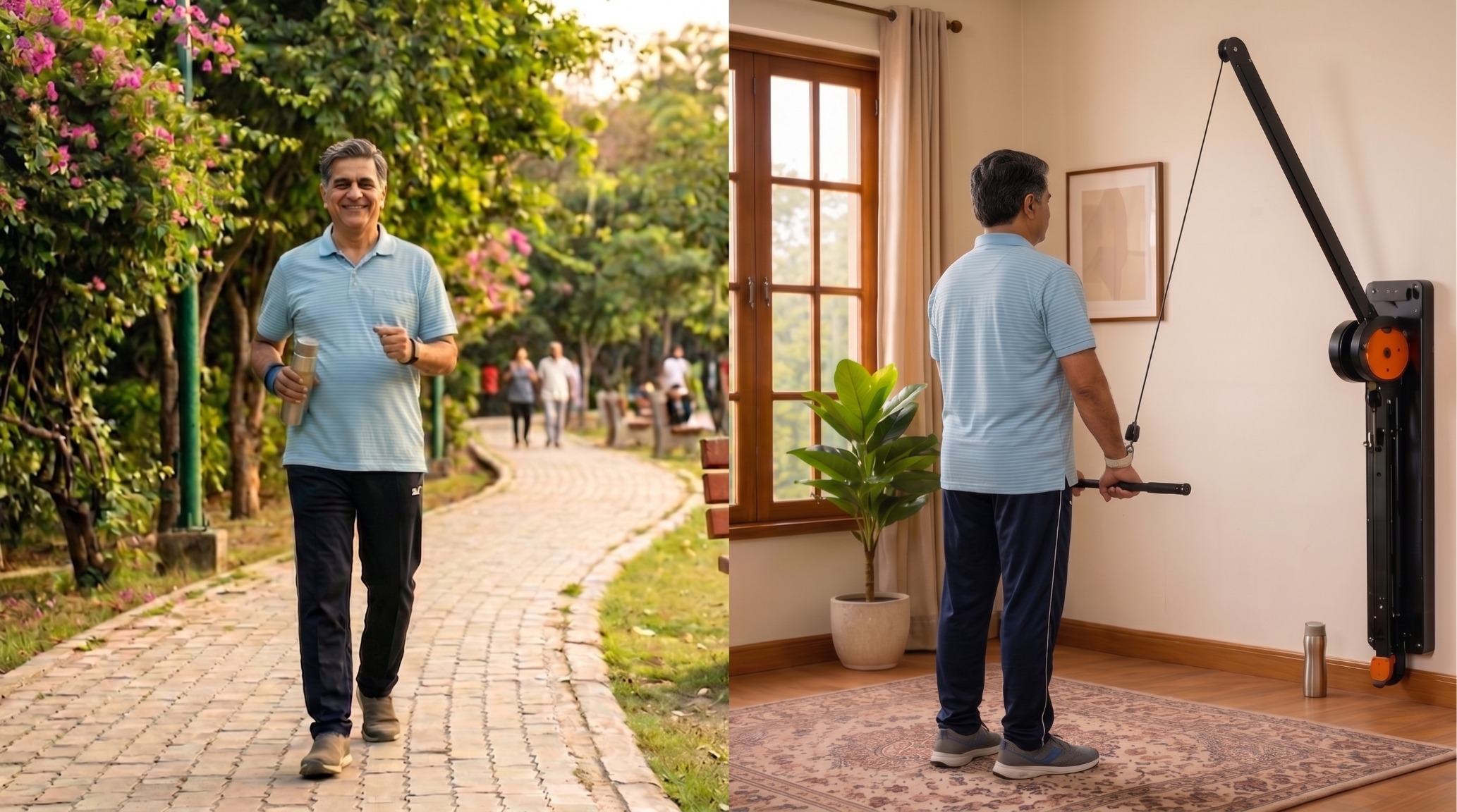
Ferra was built to solve exactly that. Designed as strength training equipment for seniors, it uses concentric-only resistance. This means the machine only loads your muscles on the way up, with no resistance on the way down. The eccentric phase, which is what causes muscle soreness and most exercise-related injuries, is eliminated. This makes it safe for older joints and anyone new to resistance training.
The resistance is also digitally controlled. There are no weight plates to configure and no risk of accidentally overloading. Ferra calibrates to your current strength level and adjusts mid-session through burnout mode, dropping resistance slightly as you fatigue so you can complete more reps without stopping. This is what makes even short daily sessions genuinely effective.
If you are looking for a safe, home-based strength training solution, explore Ferra today.
Summing It Up
After 40, the goal is not just staying active. It is staying capable: able to move well, carry weight, and handle daily tasks without discomfort.
Walking supports your heart and your mood. Strength training supports your muscles, bones, and joints. Neither replaces the other. Together, they give your body what it needs as it changes with age.
Walking vs Strength Training: Frequently Asked Questions
1. How often should adults over 40 do strength training?
Two to three sessions per week is a good starting point for adults over 40. Sessions do not need to be long. Short workouts that target major muscle groups are more beneficial than infrequent long sessions. The priority is regularity over intensity.
2. Can you do strength training if you have knee or back pain?
Yes, with appropriate modifications. Low-impact resistance exercises that avoid deep knee flexion or spinal loading can be done safely and may actually reduce joint discomfort over time. Machines like Ferra take this a step further by eliminating eccentric loading entirely, removing the phase of movement that puts the most stress on ageing joints.
NOTE: If you have an existing condition, consult your doctor before starting any new exercise programme.
3. Is walking enough to prevent muscle loss after 40?
No, walking does not provide the stimulus needed to preserve muscle mass. Resistance training is the only form of exercise that directly slows sarcopenia, the natural muscle loss that accelerates after 40.
4. How long before strength training shows results for older adults?
Most adults notice improvements in strength and energy within four to six weeks of consistent resistance training. Functional gains, such as easier stair climbing, better grip, and reduced joint discomfort, often follow shortly after. The key is consistency over intensity, especially in the early weeks.
5. What if you’ve never done strength training before?
Starting with guided, low-resistance movements is the safest approach. Focus on controlled movement patterns first, not load. Many adults over 40 start with no prior experience and build safely from there, especially when using equipment designed for beginners.